> TEOTWAWKI Blog: budget survival

Pages

Showing posts with label budget survival. Show all posts

2/26/13

$150 "Common Man" bug out kit

Here's a take on a low-cost bug out bag...lightweight, no-nonsense, low cost and a heck of a lot better than the off-the-shelf kits in the same price range. There are some important capabilities that you're lacking, but some ingenuity and know-how can help make up for those.

Not so much for most of my readers--I'm sure you've got pretty solid kits already--but to demonstrate to newbies and those casually interested that a decent kit can be put together for not a ton of money.

For a more complete kit, still built with a budget in mind, check out the $40 a week series.

Knife:
Fire:
  • Two BIC lighters - $2
  • Three pack of road flares - $6.50 at Autozone or similar. The kit is light on warmth stuff, so we want to make sure you can start a fire in lousy weather!
  • A zip-loc of dryer lint or petroleum jelly cotton balls - free
Water:
Shelter:
  • Space All-Weather Blanket  - $15 on Amazon
  • Two or three contractor grade trash bags or drum liners - ~$4; can fill with debris for insulation and makeshift sleeping bag
  • Bungee, cheap tent stakes and 50 feet of 550 cord - around $12
Food:
4000 to 5000 calories of low prep, shelf stable food. A big bag of trail mix and some protein bars will get you there pretty quickly. ~$20.

Tools:
  • Flashlight/Headlamp: A $20-$25 light. The Streamlight Propolymer 4AA is one example of a solid choice for the money - 67 lumens for 150+ hours. I haven't found a really cheap light that I've been impressed enough with to recommend. The cheapos I've tried (Costco, a couple from Amazon) have gone through various states of breaking within the first few days.
  • Additional batteries for the light - $4
  • Duct Tape - Steal some off that roll you've got kicking around the house: Free
  • Safety pins, heavy needle & thread: ~$3 if you don't have it lying around already
Multipurpose:
  • Hand sanitizer: $1
  • Baby Wipes: $1
  • 100% cotton Shemagh: $10
  • Work Gloves: $5 from the hardware store
  • Pocket AM/FM Radio: $9 on Amazon
Total (without pack): $149.50 to $155.50

For a pack, I would be really surprised if all this did not fit into a 5 gallon bucket, which you can get for $5 or so bucks at the hardware store. Alice frames are $25 on eBay, and then you bungee that bucket to the frame. The 5 gallon bucket gets you a big container and stores everything water tight. Or you could just get an old ALICE pack for $35-ish.

Most people have some kind of freebie duffle bag or old backpack laying around the house that could be made to work, too.

You could cut some corners on the above to squeeze the pack into the budget - drop the shemagh and replace with an old t-shirt or two, canteen cup for a #10 can, space blanket for a hardware store tarp, drop the road flares for some matches, paracord for hardware store line, go cheaper on the food, etc.

Pretty much a list off the top of my head - and certainly not perfect or without its holes. BUT, good starting place for those on a tight budget or putting together multiple kits. I'd look at adding a decent sleeping bag, compass, etc. down the road.

11/26/12

The Single Shot 12-gauge: Bad choice for survival long gun

I'm a huge fan of Dave Canterbury - the amount and quality of the content he gives away, for free, on YouTube is pretty amazing. But, he's been promoting the single shot 12-gauge as a primary, go-to survival firearm for a while now. He's not alone - seems the single shot 12-gauge has a lot of advocates out there.

Sure, you can pick up a new in box H&R 12 gauge for right around $100 bucks, and used for well under $100. And yep, there's not a lot to 'em - pretty simple mechanically. 12 gauge is certainly quite versatile; from bird shot to slugs to random improvised loads, there's a lot you can do with it. And, of course, there are readily available chamber adapters that allow you to shoot a variety of ammo - from .22lr on up - through a 12 gauge single shot. 

But, there's some deal breakers that need to be called out, that are rarely mentioned by the single shot's proponents.

11/20/12

Open Thread: Black Friday Deals

You want my Tickle-Me-Elmos? Come and take them!
Black Friday is fast approaching, for good and bad. I'm not a fan of braving the lines and masses of fanatical, zombie-like deal hunters. BUT, there are some deals out there, for Christmas presents and preps alike. And with online retailers, there's no lines to fight and no need to drag yourself out of the house, still hung over from tryptophan.

This first I will direct you to is Amazon.com. They have some "pre"-Black Friday deals up now - here's their outdoor/camping stuff, Hunting/tactical stuff and optics. They also have a save $10 on a $50 purchase for Kershaw knives. I'm not seeing any "must have" deals at the moment, but there's some solid savings to be had.

And, of course, Amazon has some great deals on non preps - toys for the kiddies, electronics, books, movies, you name it. We're an Amazon Associate and get a percentage whenever you click on one of our links and buy something off Amazon. It costs you nadda, and there's no form you need to fill out - Amazon does it automatically. If you enjoy what we do here at T-Blog, it's not a bad way of saying thanks. The vast majority of proceeds go towards supporting T-Blog, picking up products for review, and so on, so your purchases help us provide a better quality of content here, too.


The banner ad above will take you to Amazon's general Black Friday ads portal, where they're running early deals right now, and will have up more deals on Black Friday through Cyber Monday. Right now, they're cycling through Lighting Deals - they've got the Lord of the Rings movies on discount later today - under $4 on Blu-Ray! Check out the full calender for movie and TV deals right here.

Big Box & Outdoors Stores
Here's a few of my picks for good deals from the ads I've scanned. If you're looking for a shotgun, there are several good deals out there.

  • Wal-Mart has a Savage/Arms Stevens 12-gauge Shotgun for $169.99 - 18.5 inch barrel and a pistol grip make it a good, budget friendly Home Defense scatter gun.
  • Big 5 has a Mossberg combo 28" hunting barrel and 18.5 in defense barrel for $259.99 - with an extended 8 shot capacity.
  • Bass Pro has a H&R Pardner Pump shotgun for $150 after in-store rebate.
  • Dick's has Buy-One-Get-One-50% off on ALL ammo. There's no limit posted in the ad, so you could potentially get some really good deals here...
  • Dick's has Remington 700 Varmints for $350 after rebate - with a scope! I think these come in .223, .243 and .308, which would make for a great budget hunting/long-range bolt gun.
  • Dick's also has Mossberg Mavericks for $159 and flat savings on ALL of their regular priced firearms.
  • Gander Mountain has the EAA Windicator snub-nose .357 for $279.99.
  • Gander also has 1000-rounds of Remington UMC 9mm for $199.99
  • Cabela's has Federal 525 round bricks of .22lr for $17.99, and a 500-round ammo can of Federal .223 for $159.99.
  • Cabela's has the best price on a 10/22 takedown rifle that I've seen - $279.99
  • Finally, Cabela's has $50 off Sig Sauer P250s; with the price on their website listed at $429.99, that brings you down to $379.99. Gander Mountain also has deals on the P250, but theirs comes with a laser and costs $399.99.
  • Most of the big box stores are also showing moderate discounts on Smith & Wesson M&Ps and XDs, if you're in the market.
For around $500, you could pick up a 12 gauge shotgun and a snub-nosed .357 revolver, which would be a pretty decent baseline for survival, hunting and home defense. Or a takedown 10/22 and over 5000 rounds of ammo for right around $450. Lots of good choices.

I'm sure most of the big online retailers will runs sales, too - I'm going to check out SKD Tactical for sure. 

Those are the deals I've been able to find - but I'm only one guy with limited time. If you've found some screaming good Black Friday deals you'd like to share with the tribe, let us know in the comments section!

Edited to Add: LA Police Gear is having hourly deals right here - some really good stuff, up to 65% off. 

11/7/12

Preparing on $40 a Week: Last Week & Index!

It's over (for now!)
This has been a fun series to write, and it's actually helped pull me buckle down and fill in a couple gaps in my preps, too. This is our last week of the series - if you've been following along, you've made it to the end!

This final week is pretty simple. Take $40 in cash and add it to your bug out bag (or, if you're disciplined, a back corner of your wallet). $40 isn't much, but it'll fill up a tank of gas, pay for a cab, buy a week worth of cheap food, and so on. It's also the start of an emergency savings - add more funds to it as you can, and don't spend it unless there's a real emergency.

If you've been following week-to-week, you should have some money in the "bank" - around $15. I'd recommend spending that money on a quality knife sharpener...I'm partial to this model - the Eze-Lap brass sharpener. Good for getting a basic edge going and then strop to get a finer edge as needed. Works pretty well and the all-metal construction will last you through years of hard use.

If you've missed a week here or there, here's the whole list of posts. You can also see them by clicking on the "$40 a week" label at the bottom of the post.
  1. Everyday Carry Knife
  2. Everyday Carry Light
  3. Bugout Backpack - they've jacked the price up a bit on these, but still a good deal!
  4. Survival Knife
  5. Fire Gear & Container
  6. Sleeping Bag
  7. Shelter
  8. Water Filter
  9. Budget Individual First Aid Kit
  10. Protective Gear
  11. Chopper/large cutting tool
  12. Bug Out Food
  13. Toiletry Kit & Odds n' Ends
  14. Headlamp
  15. Food Storage Week 1
  16. Food Storage Week 2
  17. Food Storage Week 3 & Barter Goods
  18. Start emergency savings
Yep, your total spend will be around $720 when you total it all up - the price of an entry level AR-15 or a decent long-weekend vacation. Nothing to sneeze at. But, it's gear that will last you a long while, and it's stuff that you can put to use every day, not just leave sitting in a closet/trunk/garage.

The preps we put together are by no means exhaustive, but they're a dang good foundation. And, if you want, continuing regular $40 investments in preps quickly adds up - food, water, fuel, savings, etc. Just keep at it!

Thanks again for following along with this series - this was the first time I've done something this extensive & weekly on T-Blog, and it was, I think, a big success. This certainly is not the last you'll hear of the $40 a week concept or budget minded prepping in general. Stay tuned!

11/5/12

Review: Operation Z Volume 1: Introduction to Handguns


Here's a new one for you. An introduction to handguns course, set against a fictional backstory of a zombie outbreak in Los Angeles. Chris Costa, real life firearms instructor, tells the story of his fictional deployment and survival in the aftermath of the zombie outbreak. We're watching a "training program" that's being taught in case of a future zombie apocalypse. That's Operation Z Volume 1: Introduction to Handguns.

This isn't a joke either--the zombie apocalypse is taken very seriously; Costa does an impressive job weaving in stories of dealing with infected in with his firearms instruction, and there are survivor interviews and "found footage" interspersed between different segments of the training.


10/17/12

Prepping on $40 a Week: Food Storage Week 2

Tactical beans.
Last week, we recommended picking up a case of white rice, and a few dollars worth of extra canned goods. This week, we're going to complete the traditional rice & beans food storage by adding some beans to our pantry.

Beans come in dried and canned variety. Dried are a lot cheaper, but the prep work is intensive - soaking and then cooking takes 45 minutes to 90 minutes. That's a lot of time, and it's a lot of fuel. If you've got say a woodstove and plenty of wood, not such a big deal. If you're cooking off of a camp stove with a limited supply of propane, it becomes a bigger deal quickly.

Canned beans are a bit pricier, but they are really convenient and18 make using up your beans much easier. Open can, add to dish. We add them to soups, chilis, serve them as a side dish and mash 'em up for refried beans.

We store black and pinto beans. I generally like varieties that come with some kind of seasoning out of the can - they're usually pretty tastey and don't require much extra work to make 'em into a good dish. I wouldn't be afraid to mix up your bean variety - throw in some baked beans, chilis, etc.

Cans cost about .69 to $1.29 or so. Look out for sales and buy cheap brands. If they do have seasoning, I'd try out a can of two before clearing the shelves.

Beans are loaded with protein and fiber, and pretty dense calorically, too. One 10-oz can of black beans, as an example, will have around 420 calories, 18 grams of fiber, 24 grams of protein.

Since we're gunning for a month worth of food for a single person, go ahead and pick up around 30 cans of the beans of your choice. So, depening on the brand and price you'll pay, you're looking at $20 to $30.

Rice and beans have zippo in the way of fats, so you'll want to add some when you cook 'em up. Olive oil is what is usually called for in recipes, and most people already have some in their pantry. If you're low on it, pick up a bottle to keep in reserve. Other oils will do in a pinch as well. Oils need to be rotated around once a year, so it doesn't make sense for most people to stock up a huge quantity.

If you've got extra money left in your $40, go ahead and spend it on some additional canned goods/shelf stable food, to help add some variety and supplement the standy-by rice n' beans. Ramen/cup-o-noodles might not be a great health choice, but they're cheap and they're food. Some bulk quick oats or bisquik can give you a change of pace for breakfasts. Cans of meat, soups, stews, peppers and tomatoes can add some variety, too. If your spice cupboard is lacking, maybe make a few additions - salt, pepper, bullion cubes, bulk spices and sugars are cheap and one can do a lot with 'em.

Our case of rice and a can of beans a day will stretch us over that month that we're looking for - it's  approximately 66,000 calories, or a healthy 33 days worth of 2000 calories a day. Add that onto whatever food you already have at home, plus the supplemental food you've bought this week and last, plus the 3 days of food in your bug out bag, and you're sitting fairly good. In the CONUS, I don't know of anyone in recent history who has been unable to access outisde food for over a month, so it is a pretty good baseline.

Next week, we'll finish off the low-budget one month food supply and move into the last portion, barter goods! Stay tuned. It's been a fun ride and we're almost done.

9/25/12

Public Service Announcement: Premade 72 hour kits are Crap

I wanted to throw this public service announcement out there for any newbies: pre-made 72-hour kits and bug out bags are, almost universally, complete and utter crap.

Why?

They are a bundle of cheap, made in the least-skilled factories in China stuff, with a huge markup slapped onto 'em. Photos might look ok, but trust me -- flimsy materials, shoddy construction and all around crappiness abound. Contents will be broken on arrival, break after their first use and just generally fall apart on you.

Really, you say?

Really. The makers of these kits find the absolute lowest costs junk, bundle it together and call it some variety of survival kit. We're talking stuff that's so crappy they'd have a hard time selling it in a dollar store. It's a borderline scam.

These kits prey on two traits that most of us have: laziness and cheapness.

Laziness because, hey, you buy 'em once and you're done, right? 

Cheapness because, hey, you can get a kit for under $100. You'll probably never use any of this stuff, so why invest a big chunk of change into this stuff.

Don't do it.

9/17/12

What's your baseline for preps?

What time baseline do you use (or are working towards) for your preps? Three days? A week? Two weeks? A month? Six months? Three years?

Food, water and other consumables. What's the minimum that you are comfortable with?

If someone was new to the whole disaster/end of times preparation thing, what time horizon would you recommend for them?

My personal baseline is around a month for food and two weeks for water (plus means to acquire & clean more). More is of course better, and we certainly have more stocked up, but a month will outlast most troubles. Less and I start to get an uneasy feeling...

For newbies, I recommend starting with two weeks and going from there. Very doable, even in a small apartment. More "getting started" recommendations right here.

How about you guys? What's your personal baseline, what do you recommend to others?

9/13/12

Prepping on $40 a Week: Choppers!


When we chose our budget survival knife I mentioned that we'd be picking up several tools instead of trying to use a big, do it all Rambo knife. When you try to have one tool that does it all, you end up with compromised performance. A fixed blade knife can do a lot, but it can't do everything, and it can't do everything well. So, we'll be adding a bigger tool for serious cutting/chopping work to our budget survival kit.

Instead of recommending a specific tool, I'm going to run through several excellent choices that fall within our $40 price range. This tool choice is more dependent on your area of operations--where you live. Someone who lives in an urban center will have different needs then someone who lives in the middle of a forest, and someone who lives in the desert or swamp will again have different needs.

9/5/12

Prepping on $40 a Week: Protective Gear


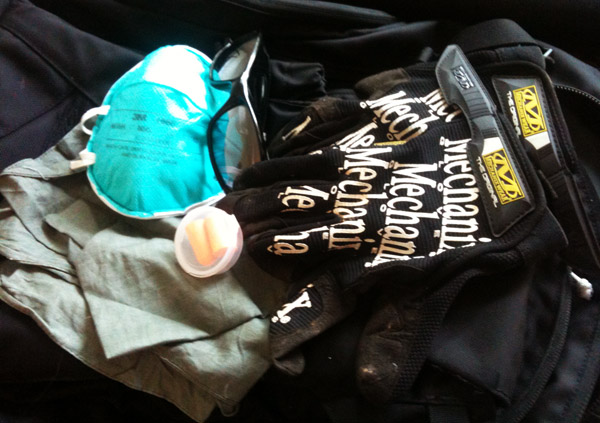
Things like gloves, hearing protection, glasses, and so on are often overlooked when packing a survival kit. Good luck surviving with an eye fragged by flying debris or if your hands get shredded falling on broken glass. Protecting your body from the omnipresent dangers post-disaster is a pretty big deal, so don't slack on it.

We're going to be adding a good pair of work gloves, eye protection, ear plugs, an N95 mask and a bandanna to our budget kit this week.

The gloves I have used for several years now are original Mechanix gloves. They are not as hardcore/armored as many tactical gloves on the market, but they provide some decent protection while retaining dexterity. They are also quite affordable. Mine are the original black/white pattern, but I would go with the new black/black or Coyote color patterns if buying new. Amazon has 'em for $15.99, and Lowe's hardware also carries a pretty decent selection of them.

8/29/12

Prepping on $40 a week: Budget IFAK

Contents of an IFAK - clockwise from the top: NPA, TK4 tourniquet in the middle, combat gauze, gloves, H&H gauze
and an Isreali bandage.
Tactical Combat Casualty Care has been pivotal in reducing preventable deaths in combat. A central part of TCCC is the individual first aid kit (IFAK). An IFAK is not a boo boo kit full of bandaids and cough drops. Instead, it contains critical equipment for addressing preventable death from wounds sustained in combat.

For a survivor, having these same supplies and the knowledge on how to use 'em can be a life saver.

You can buy very nice and capable IFAKs, premade and ready to go. But, they will run you around a hundred bucks, outside our budget. Never fear, you can put together a similar kit for within our $40 budget--yep, really.

How? We'll walk you through it - click below!

8/22/12

Prepping on $40 a Week: Water

Water is one of your top concerns in any survival scenario - no water, no live. And sure, you can drink unfiltered water and be ok...or you can get horribly sick and die dehydrated from the squirts.

For a long time, water filters kind of sucked. Heavy, unweidly, expensive, lots of work for little reward and they'd generally wear out pretty darn quick, too.

Then along came the million gallon guaranteed Sawyer PointOne, a truly disruptive technology for the water filtration market. Sawyer's filters are derived from kidney dialysis technology --this particular filters down to .1 microns - better than almost anything else out there. And it weighs all of a few ounces.

As far as I'm concerned, it's the best choice for light and fast water filtration, and it just so happens to be within our $40 a week budgetary reach.

8/15/12

Prepping on $40 a Week: Shelter

A soldier hunkers down during SERE training.
Image from defenseimagery.mil.
Shelter is one of those things where you can go in a huge variety of directions--full blown tent, ultralight tent, tipi, hammocks, tarps and many permutations of them. Heck, you can go with no shelter at all if you've got the proper tools, knowledge of building survival shelters and some time--or if you can rely on existing shelter.

We surveyed the tribe on our Facebook page (like us, we're going to do a give away at 1000 likes!),  and it turns out tarps and tents are tied for your top choices for bug out shelter.

A big part of your shelter choice will be informed by where you live--Montana is going to be different than Arizona. So, take the recommendation here with that in mind. Personal preference also comes into play, big time.

Shelter is also one of those "might use" items in a BOB, too. Your plan #1 is probably not going to be to hunker down in the woods somewhere. Shelter that you're going to pack with you is only typically going to come into play if there's no viable pre-existing structure that you can hunker down in--no friend's/family's homes, no hotels, no nothing. If I've got a working vehicle with locking doors, I'm probably going to hunker down in that before I strike camp somewhere, too.

And really, we're talking about bugging out--getting away from danger as quickly as possible--not a luxurious back country camping trip. You'll want to be moving as fast and as long as possible, and only stopping and holing up if you have to.


8/8/12

Prepping on $40 a week: Sleeping Bag


A good sleeping bag is an oft under estimated thing, but if unable to sleep because you're freezing your butt off, you will be wishing for one. Of course, a sleeping bag is useful beyond that-camping, crashing at a friend's place, etc. They are handy things to have around, and every family member should have at least one.

Standard big box store sleeping bags are both too heavy and too bulky. Backpacking brand sleeping bags are nice, but they generally run well over our budget. Some budget minded folks instead go with poncho liners or surplus wool blankets, but in my experience, neither are a great substitute for a decent sleeping bag. 

There are luckily some good options for sub $40 sleeping bags, and of those, the USGI Patrol Bag is amongst the best.


8/6/12

Food Bin Dump

This bin made a guest appearance in the background of my initial review of the Kifaru Longhunter. I had a few questions about it, so I thought I'd let you see all of what's inside.


It's roughly three week's worth of food for the T-Blog family--a lot of THRIVE stuff, some Mountain House, a few not really visible MREs and some misc snacks. Rice is about the most complicated thing to cook here--the THRIVE stuff is mostly add to boiling water and cook, and you probably know MH and MREs.

It's kept loaded up in the Rubbermaid Action Packer (Lowe's has these last I checked...about as good of a plastic bin as I have seen), and stored inside. Otherwise, this stuff would all be sitting on a shelf--this way, it's ready to go at a moment's notice.

This is in supplement to the three day's worth of food in our bug out bags (MREs, MH and snacks)--though we could probably get away with less food in our BOBs, I'm a worst-case-scenario kind of guy.

It's heavy, but I'm not going to be hiking with it.

We have a separate Action Packer with camp kitchen gear--stove, utensils, axe, fire kit, pots and pans. Yes, a can opener too. Bug out bags again have additional redundancy.

Just picked up some multivitamins to add to the mix...and we probably need a bigger thing of syrup, too. A couple other things need restocking, but that's the general bin.

8/2/12

Tip of the Week: Blanket Roll

Throughout history, a blanket roll was a pretty common way to carry basic sleeping gear and a few extra items. Soldiers, explorers, mountain men and frontiersmen of many eras carried 'em. They show up quite often in historical photos like the one on the right, of a Confederate soldier in the Civil War. The bedroll not only frees up room in his pack and distributes weight across his body, but it allows him to ditch the pack if needed and still have basic covering/shelter and whatever else he has tucked inside.

In the old days, the blanket would typically be made from wool. Pendleton wool blankets have been made for over 500 years-- were a common trade item with the Injuns/Native Americans and a common piece of kit on the frontier. Wool has been used for a long time and it still works today.

Of course, you can use just about any thick blanket, tarp or poncho to roll up a blanket roll. If you're without a pack, need to supplement a smaller pack or want the "drop and go" ability, a blanket roll is a good trick to have in mind.

8/1/12

Prepping on $40 a Week: Fire Gear & Container

It's been way too long since our last entry in the $40 a week series, but we're back. Last time around, we talked survival knives. This week, we're focusing on two bug-out bag essentials--a fire kit and a container for cooking and boiling.

Fire Starting Gear
There's a variety of ways you can go with either, and most of 'em are pretty good. For fire kit, I personally like a butane lighter or two, backed up with a ferro rod/fire steel, and with plenty of good tinder.

Raid your junk drawer or mosey on down to the local grocery store and pick up a pack of your lighters of choice--I generally go with Bic lighters of a lighter color. Bics are pretty sturdy and bomb-proof relative to cheaper brands, and the lighter color allows you to check fuel levels. Having two--one to ride in your pack, one that rides in your pocket while you're in bug out mode--is a pretty good idea. Bust the annoying child lock off too.

7/17/12

Prepping on $40 a Week: Survival Knife


A good knife ranks at the very top of most survival lists, especially when we're talking wilderness survival. The uses are pretty much endless--cutting, skinning, gutting, slicing, carving, whittling, batoning, chopping, stabbing. The Mora knife in its various forms is one of the most common choices among survival experts for good reason. It's affordable--almost all under $30--comes with an excellent, scary sharp blade, comfortable handle AND it's lightweight. Perhaps not surprisingly, it's also our pick for a fixed blade knife for our $40 a week series.

7/4/12

Preparing on $40 a Week: EDC Flashlight


For a long time, I carried only a keychain flashlight as a part of my everyday carry. I worked my way up from Photon lights to the Fenix E01 and finally a Fenix LD01. However, there's only so much performance to be wrung out of a keychain-sized light. If someone can't/won't carry something bigger, or as a backup, they're great. But really, a step up in flashlight size is necessary to start get some really impressive and useful performance.

So, I bought a Surefire E1B, which has become one of my favorite things, and pretty much embodies what I look for in an EDC light. Single battery for ease of carry, yet still kick out around 100 lumens and run for several hours. A "clicky" tailcap is important to me--easier, faster operation and allows for momentary on/off. At least one "low power" mode for battery conservation, and a dead-simple UI--don't make me twist the cap 5 times, throw the light in the air and clap three times to get to another mode. A great pocket clip is also key and what continues to set the E1B apart for me. And, of course, rugged construction--it needs to stand up to lots of regular use, the occasional drop on a hard surface, some level of water resistance and so on.

Of course, a $120 light like the E1B is more than a little bit out of our $40/week budget. I went looking for something that had most of the features that I think a good light needs to have, and I wanted it in a common AA battery--AAs are cheap and readily available locally, so all of our electronics will run off AAs.

I'm really impressed by the light that I tracked down, the Fenix E11--a $26.95 light that performs like a light two or three times the cost.

6/26/12

Prepping on $40 a Week: EDC Knife


Hope you've got your budgets worked out, because we're diving right into our $40 a week series. We're starting out by building a solid, budget-minded EDC. This week, we're looking at our first selection, a pocket knife.

There are actually a surprising number of excellent choices for under $40; the Spyderco Tenacious, which is a really great knife for around $35, is a very solid pick at this price point. However, remember that we're writing for someone really starting out from scratch and looking to maximize the utility of the limited budget at hand.

With those constraints in mind, I'm deviating from what you'd normally think of in a pocket knife recommending a multitool - the Leatherman Sidekick.